Monday, December 29, 2008

The Agony of Defeat, As Seen On TV

Having spent said Christmas in Houston (see previous post), and duly partaken in what said city has to offer in abundance (cheap drinks, exemplified by the whiskey/coke and Lone Star I bought for $5.50, fast food unavailable in New York - in this instance Whataburger, and Tex-Mex style queso in which a tortilla chip may be dipped), the time came for my reluctant return to New York. Referring to this place as "home" seems a bit presumptuous at the moment, as does referring to Houston as such (although this was undoubtedly the first time Houston hasn't felt like home, surely due to things which were well within my control not long ago but which are now well outside my control).

On my return flight, Jet Blue gave me the option of watching Liverpool trounce Newcastle 5-1, and since I lacked any headphones this seemed like the obvious choice next to the plethora of programming for which sound is absolutely necessary, the Weather Channel, and nothing at all. Watching the game, I was reminded (six times, actually) of something I'd noticed a while back. This Thing that caught my attention is, in the opinion of the governing bodies, broadcasters, and (presumably) viewers of sporting events in the USA, the apparent lack of sportsmanship involved in the celebration of a decisive point scored. This doesn't come from the fact that NFL players can be fined for excessive touchdown celebration (though it is surely indicative of the line of thought), but rather the difference between the way television broadcasters choose to shoot games in the US and in Europe. Featured prominently in a European broadcast will be triumphant goal celebrations with all the requisite homoerotic face-kissing and dog-piling (unless, of course, an own-goal is scored, at which point the American model is followed). If you watched an American version of the same game you may never have known that Kaka pulled up his shirt to reveal the massive "Jesus is my BFF" tattoo across his chest after scoring that goal. Instead the camera would cut straight to the goalkeeper's inevitable look of dejection, usually followed by some harsh, yet inaudible, words for his do-nothing teammates and a retaliatory punt of the ball into the back of his own net.

It seems as though, when it comes to sports, we Americans much prefer to revel in the loser's agony than the winner's triumph. It gives the viewing audience at home the opportunity, depending on your preference, to either laugh in the face of the poor sap whose hopes and dreams were just crushed or to give those people unfortunate enough to be rooting for the losing team a target at which to vent their frustration. We are, in all other aspects of our lives, a rather gloat-happy people.


That said, I now leave you with a list of names of actual CNN newspeople:
Wolf Blitzer
Candy Crowley
Poppy Harlow
Kitty Pilgrim
Sunny Hostin
Don Lemon
Joe Johns
Reynolds Wolf
TJ Holmes

Tuesday, December 23, 2008

On Meeting Milos

A couple of weeks ago I had the opportunity to see my all-time favorite film, The Firemen's Ball, at BAM Cinematek, followed by a question and answer session with one of my heroes, Milos Forman. Normally I don't actively participate in these kinds of events, but in an attempt to convey my expansive knowledge of the Forman oeuvre to the rest of the attending audience (as well as to feel, for a brief and fleeting moment, that I was having an actual substantive conversation with one of my heroes), I decided to ask him what I thought was a fairly innocuous, yet thought-provoking, question.

I said, "The version of your most recent film, Goya's Ghosts, that was released theatrically seemed to have been cut significantly, presumably at the request of the studio.* How did you feel about the final edit of the film, and are you ever disappointed when you watch one of your films or by what you've had to cut from them?"

*given the fact that the release date was repeatedly pushed back, likely due to poor reception by test audiences, and that the version that was finally released was a scant and disconnected hour-and-forty-five minutes long.

He responded, "I am very proud of Goya's Ghosts, but for some reason critics and audiences didn't like it. I am disappointed by that."

So it seems as though he may have taken the question the wrong way. I still think it's a valid question. The difference between the original theatrically released version of Amadeus and the "director's cut" (which is presumably the way Mr. Forman had intended it to be viewed) was twenty minutes. Surely it would be disappointing to spend that long on a project and then have to cut twenty minutes of footage you thought were necessary to maintaining the film's intergrity (and, in the case of Goya's Ghosts, it's coherency). I guess the question I was trying to ask was, "how would a 'director's cut' of Goya's Ghosts differ from what I saw in the theater?"

Maybe next time I'll ask it that way.

In about twenty-four hours I will be flying from the pit of despair, den of iniquity, and generally cold and forsaken monstrosity that is New York City, and return to Houston for a few days. It would be a much nicer journey if I had this:

Friday, November 21, 2008

Iced Coffee on a Cold Day

There are exactly two establishments capable of consistently making a decent and palatable iced latte within a ten-block radius of 45th Street and Fifth Avenue in Manhattan. By 'decent and palatable' I mean some kind of liquid concoction that one can ingest without saying something like, "come on" or "really? are you kidding me?" Generally there should be a good deal of ice in a form that could still be classified as 'ice' and the color should be somewhere near the interior of a BMW with tan leather seats or the hair of a camel. The milk, be it skim or soy or whole, need not be steamed and the espresso need not be poured over the ice for five minutes while the milk is being steamed for no reason.

I shouldn't be so surprised that these two establishments would be Starbucks and Dunkin Donuts, given that they have devised idiot-proof systems which leave very little room for renegade baristas to go rogue on your iced latte. It certainly is sad though.

Maybe the problem is that I'm ordering iced drinks in the first place. Maybe they're the ones saying "come on" and "really? are you kidding me?" in their heads to me when I place my order. It is freezing outside, after all.

I've tried to explain my seemingly masochistic desire to drink iced coffee when it's cold outside and everyone else is huddled around their steaming caramel macchiatos. In an attempt to justify myself I've come up with a theory in which, by drinking a cold drink, one's body temperature is lowered to a level that, while still safe, corresponds with the bitter cold of the air surrounding said body and therefore makes the body not feel as cold.

Having not written anything here for a while, this is a sampling of things I have thought in the last couple of months:
"Yes we did."
"It's a shame that the Houston Colt .45s changed their name to the Astros."
"Please don't let this be the time I get mugged on my way home."
"Only in New York."
"Only in the USA."
"Really? 0-3 at home? To the Red Bulls?"
"I know it's always been that way, but if you see a better way of doing something, why not adopt it? Paper money in this country should be different sizes and colors."
"Protect the sanctity of marriage; ban divorce." and "What's so traditional about polygamy?"
"Must be nice."

Tuesday, August 5, 2008

Encounters at the End of the World


While legendary documentarian Werner Herzog’s latest film, Encounters at the End of the World, uncovers life in Antarctica, it is quick to point out exactly what it isn’t: March of the Penguins. In fact, those cute, fluffy penguins only appear for about five minutes, yielding most of the screen time to the Herzog’s real interest - the human.

It may come as a disappointment to some that a filmmaker would journey all the way to the South Pole and come back with a movie about people, but these are no ordinary people. Like most of the thousand inhabitants of McMurdo Station, the largest American research center in Antarctica, Herzog is on a quest. His is to understand human nature - our need to conquer and inhabit every frontier - by examining the kind of person that would choose to live their life in such isolation at what Herzog dubs “the end of the world.”

What he finds there among the scientists and heavy-machinery drivers is a smattering of drifters and dreamers, societal misfits cut off from the rest of world whose common thread is a desire to “jump off the map.” Those familiar with Herzog’s last film, Grizzly Man, will find a striking similarity between McMurdo’s inhabitants and Grizzly Man’s doomed protagonist Timothy Treadwell, who preferred life with wild Alaskan bears to human society. Clearly Herzog has an affinity for these “professional dreamers.”

With a bare-bones film crew including only himself and his camera-man, Herzog evidently went to Antarctica not knowing what he would find, the result of which is a film that veers in a few different directions, much like a conversation whose ending bears no resemblance to its beginning. It’s part nature documentary and part social commentary, with hypnotic visuals of the aquatic world below a six-foot-thick sheet of ice, set to hauntingly ominous choral chant, intertwined with Herzog’s trademark cynicism and humorously blunt narration.

No film about “the unknown continent” would be complete without a warning about the perilous future of the environment, but Encounters at the End of the World’s brief caution is followed by Herzog’s reprimanding of environmentalists who struggle to salvage endangered species at the expense of a dying human culture.

Another of the movie’s preoccupations is the obsession of many to hold a place in the Guinness Book of World Records, to be made famous as the first to do something, regardless of what that something is. Beginning with British explorer Ernest Shackleton’s original expeditions to Antarctica in the early 1900s, Herzog questions the motives of exploration for the sole purpose of gaining notoriety. It begins to beg the obvious question: why can’t we as humans allow anything to remain unknown? Must we conquer every frontier?

While the exploration of Antarctica was originally called “the end of adventure,” it seems unlikely that humans will ever quell their desire for locales on which to put footprints. Herzog poignantly likens Antarctica to the moon and McMurdo’s dismal mining-town feel to what future space stations would presumably be like.

Perhaps the film’s lack of a single cohesive theme could be considered one of its flaws, but it remains fascinating and entertaining nonetheless. It would be hard to say that Herzog really answers the ambitious questions about human nature he poses at the beginning of the film, but I doubt he expected to. It’s not necessarily a failure that he was unable to solve his thesis. In fact most documentaries don’t. The difference is that Herzog is bold enough to state his intentions at the beginning of the film, and Encounters at the End of the World is no less engaging for it.

Encounters at the End of the World is an enlightening look at the life in Antarctica that most people haven’t the slightest clue about, and an engrossing study of the disillusioned idealists who inhabit that world in solitude, seeking refuge from society like fish who crawl out of the sea to, as one of the film’s scientists asserts, “escape the horrors of the deep."


(The Daily Cougar, August 5, 2008)

Friday, August 1, 2008

The Band's Visit


“Once - not long ago - a small Egyptian police band arrived in Israel. Not many remember this. It wasn’t that important.” So begins The Band’s Visit.

While the opening titles allude to the simplicity of the film’s story, the words about remembering and importance are far from true. In fact, the importance of the Alexandria Police Orchestra’s Israeli visit, if only to them, could not be less apparent.

The story of Eran Kolirin’s self-assured directorial debut is undoubtedly simple: an eight-man police band from Egypt arrives in Israel to perform at the opening of an Arab cultural center, but due to a string of misunderstandings, winds up stranded in the wrong city. Due to a lack of hotels in the area, some curious local townsfolk invite the band into their homes for the night. While band leader Tawfiq (Sasson Gabai) tries to avert disaster and keep the trip from veering any further off course, a conflict with discipline-lacking new recruit Haled (Saleh Bakri) bubbles just below the surface.

When sexy local restaurant owner Dina (Ronit Elkabetz) offers Tawfiq and Haled her spare bedroom for the night, it seems as though Haled’s Don-Juanish self-confidence and womanizing skills would inevitably have him wind up with Dina before the night is done, but it’s the older Tawfiq she chooses to spend the evening with - much to the betterment of the film. In fact, the true highlight of The Band’s Visit is Tawfiq and Dina’s interaction and chemistry. Both Gabai and Elkabetz are phenomenal; their mutual loneliness and longing make for an achingly bittersweet evening. With Dina feeling stuck in a small city and Tawfiq’s solitary existence, they both bring a much longed for dose of excitement to one another, the possibly of something new. Tawfiq’s straight-laced facade is slowly broken down, revealing an unexpected sadness and sentimentality that has lain dormant. In this way, the band’s seemingly ill-fated journey turns out to be mutually beneficial to both the band and the townspeople.

After getting ditched by Tawfiq and Dina, Haled tags along with the haplessly awkward Papi, whose utter lack of experience with women is equal only to Haled’s seasoned wisdom in that department. Under Haled’s hilarious guidance, Papi endearingly struggles to make in-roads with a friend’s gloomy cousin, more or less successfully. Meanwhile, three of the band members inadvertently crash the birthday dinner of their host’s wife in what should be remembered as one of the classic awkward dinner scenes ever committed to film, ending in perhaps the only spontaneous sing-along scene that has ever felt real.

With such a simple story, the emotional depth comes as a surprise, subtly sneaking its way in, growing unnoticed until it finally breaks your heart. The film is about longing - the universal longing for connection borne of isolation, Haled’s longing to play trumpet in a jazz band, Tawfiq’s right-hand-man’s lamentation over a long-unfinished concerto and desire to conduct the band. But it’s also delightfully funny and full of hope and charm. It feels so real and achingly lonely that, even in the same room, the characters seem isolated.

The beauty of this film is that it’s not about any regional or cultural conflict between Arabs and Israelis. The fact that the opening titles appear in both Hebrew and Arabic says a lot - it’s about people. The Band’s Visit is a celebration of humanity and the places we all find common ground, even if that place is in loneliness. It’s the kind of film that makes you happy to be alive and restores your faith in humanity, making you giddy about the possibilities of life, both good and bad.


(Film Monitor, August 1, 2008)

Thursday, July 17, 2008

The Year My Parents Went on Vacation


Brazil, 1970. The country is in the hands of a harsh and repressive military dictatorship. Pelé just scored his thousandth goal and is preparing to lead the Brazilian team into the World Cup. In The Year My Parents Went on Vacation, writer-director Cao Hamburger deftly tells the story of this tumultuous year through the eyes of an abandoned 12-year-old boy named Mauro, played by Michel Joelsas.

When Mauro's leftist parents are forced to flee from the reaches of the regime, they have no choice but to leave Mauro with his grandfather in an Orthodox Jewish neighborhood in Sao Paulo. Oblivious to the political upheaval around him, Mauro's most pressing concern is the lineup of the Brazilian World Cup squad.

Washed with a quintessentially '70s color palette of oranges and browns, the film follows Mauro through overwhelming uncertainty concerning his parents' return and boyhood fascination with the alien world of Jewish tradition in which he has found himself. With his parents' "vacation" growing longer, he is reluctantly taken in by an elderly neighbor named Shlomo (Germano Haiut), who offers Mauro guidance and secretly attempts to uncover the whereabouts of Mauro's parents.

The film is carried on the back of Joelsas' powerful and wise performance. This is no small feat for a child actor, particularly considering the cringe-inducing performances we've come to expect from kids his age. A diverse and colorful array of supporting players help the film along, including a young girl who takes an immediate liking to Mauro, an Italian communist who feels obligated to help the son of his absent comrades, and the sexy shop girl whose motorcycle-riding black boyfriend Mauro longs to emulate. After watching him play goalkeeper in a local soccer game, Mauro reveals his inner desire to "be black and fly." He decides that his true calling is to become one of the world's greatest goalies.

Despite being surrounded by new friends and generous neighbors, Mauro's existence remains lonely and uncertain. He anxiously awaits a phone call from his parents that seems less likely to come with each passing day. As the World Cup begins, the entire country grinds to a breathless halt to watch the game, rapturously erupting with each goal scored. It seems the characters, no matter their background, briefly put aside their differences and unite behind their soccer team. With all the turmoil going on around them, they share a similar passion for sport - whether that's necessarily a good thing is debatable.

Because it's told from Mauro's perspective, soccer plays an important role in the film; however, the beauty of this movie is the way in which Hamburger is able to quietly infuse sociopolitical commentary into what is essentially a coming-of-age story. The message is not heavy-handed or blatant and never discloses anything in an overly obvious way. Mauro remains innocent, so the gravity of political turmoil is revealed in small doses through the adults around him. Likewise, Hamburger does well to avoid cliches that tend to plague similar coming-of-age films.

The Year My Parents Went on Vacation is at times touching and heartwarming, but often laugh-out-loud funny. As a group of communists huddle around a small television to watch the opening match of the World Cup between Brazil and Czechoslovakia, one of them proclaims, "a victory for Czechoslovakia is a victory for Socialism." When the Czechs score their first goal, he begrudgingly reminds everyone, “this is a good thing.” Their support for the Czech team is less than half-hearted as they breathe a collective sigh of relief when the Brazilians eventually take the lead.

The Year My Parents Went on Vacation is a gentle and poignant comedy about growing up, political upheaval, clashing cultures and the things that unite us all. It is definitely worth the trip.


(The Daily Cougar, July 17, 2008)

Thursday, July 10, 2008

Mister Lonely


The premise of Harmony Korine's new film, Mister Lonely, sounds pretty funny: a lonely and struggling Michael Jackson impersonator meets a woman who lives her life as Marilyn Monroe. She invites him to live in a commune with a slew of celebrity impersonators, including her husband, Charlie Chaplin, and their daughter Shirley Temple.

The adjectives that come to mind when watching this movie are the same ones used to describe the life of the real Michael Jackson: tragic, sad, bizarre and, yes, even funny sometimes.

Writer-director Korine is perhaps best known to mainstream audiences as the writer of the disturbingly raw 1995 film Kids, and has since been quietly building a name for himself on the indie-film circuit, directing fiercely independent and unusual films such as Gummo and Julien Donkey-Boy in the late '90s. In this way, Mister Lonely is quite unexpected.

The story centers on Diego Luna's street-performing Michael Jackson whose utter dislike for himself and failure to fit in has led him to a life of pretense as an escape from reality. When he meets a Marilyn Monroe impersonator, played by Samantha Morton, after a gig at a nursing home, she invites him to stay with her in a rural Scottish commune of fellow celebrity impersonators. He reluctantly obliges, leaving behind his lonely existence in Paris. Marilyn's husband, a volatile Charlie Chaplin impersonator played by Denis Lavant, immediately suspects Michael and Marilyn's budding infatuation, and palatable tension and resentment quickly build.

All the inhabitants of this idyllic commune are trying to escape reality and a world of mediocrity. In this setting they can live in a dream world where they become what they wish they were, no questions asked. While we never learn any of their actual names, there is a real sadness to these people. A subtle sense of foreboding hovers over the entire film, and one finds oneself waiting for the inevitable tragedy to strike.

Michael, in a way, brings a sense of normalcy to the retreat of societal misfits, but with it comes a grim dose of reality in the way of disease and death, as they are forced to deal with their problems in very real ways. When they prepare to give a public performance - touted as "the greatest show on Earth" - in their makeshift theater, one begins to wonder if these people are delusional or simply naive. Perhaps it's a little of both.

Mister Lonely treads precariously along the line between sincere eccentricity and embarrassing quirkiness, thankfully never falling too far into the latter. The film threatens to fall apart altogether as it nears the finale, becoming downright bizarre, but the absurdity never really feels out of place. Michael eventually comes to the realization that living as someone else isn't necessarily better than living as himself, and that he can't entirely escape reality. It will find him, and he may as well embrace it.

Throughout the film, a sub-story about a commune of nuns who, like these celebrity impersonators, form their own reality by making faith-testing leaps from an airplane is interwoven. Legendary director Werner Herzog plays Father Umbrillo, the nuns' morally upstanding leader and copilot for their aeronautical feats. Like Diego Luna, Herzog brings a sense of tragic hilarity to the film, making it hard to commiserate with such inherently pitiful characters.

To his loyal fans, such a sentimental film as Mister Lonely may seem like a bit of a departure for Korine, but audiences largely unfamiliar with his previous work will find the film brimming with originality, and it is exponentially more accessible than any of his previous work. The performances are heartfelt and honest, and the story, despite its flaws, never feels anything but genuine.

With Mister Lonely, Korine has made something most would never have expected - a touching, sweet film about the fear of facing reality and the longing for acceptance - but has done it with such freshness and inventiveness that it could not have been made by anyone else.


(The Daily Cougar, July 10, 2008)

Thursday, July 3, 2008

Something I Wrote

“If I wanted to read, I’d pick up a book.”

I can’t tell you how many times I’ve heard some variation on this line. The truth is, most Americans scoff at the very idea of watching a foreign film and avoid doing so at any cost. Foreign films are such a rarity for mainstream American movie-watchers it’s easy to forget that the motion picture today is not an entirely our invention.

When Auguste and Louis Lumière presented the first motion picture projection at Paris’ Grand Café in December 1895, cinema as we know it was born. That’s right: the first movie ever screened publicly was a foreign film. Since that time, foreign-made movies have kept pace with their US contemporaries and have, at many times, been light years ahead of them in terms of creativity and subject matter.

American cinema is indebted to the innovations of these global pioneers, yet to many these films remain largely overlooked and underappreciated. For this reason I’ve compiled a list of must-see foreign gems, and because the only thing worse than a foreign film to most people is an old foreign film, none of these is more than twenty years old. But be forewarned: there will be reading required.


Sólo con tu pareja (1991, Mexico). Directed by Alfonso Cuarón, of Children of Men fame, this farcical sex comedy about a womanizing businessman who is led to believe he has tested positive for HIV is credited with ushering in a new wave of Mexican cinema, paving the way for films like Y tu mamá también and Amores Perros.


Delicatessen (1991, France). Before making this generation’s most well-known foreign film, Amélie, director Jean-Pierre Jeunet helmed this darkly comic tale of famine in a bizarre apartment building in which humans are the only thing left to eat.


Man Bites Dog (1992, Belgium). A hilarious but often sickening mockumentary in the vein of This is Spinal Tap, Man Bites Dog follows a charming serial killer who makes no qualms about sadistically murdering innocent people and openly discussing his “craft.”


The Celebration (1998, Denmark). The first in a no-frills cinematic movement called Dogme95, The Celebration depicts a father’s disastrous 60th birthday party in which his son publicly presents party-goers with his dark past.


Central Station (1998, Brazil). An aging former teacher befriends a poor boy after his mother is tragically killed and sets out on a journey with the boy to find the father he has never known.


All About My Mother (1999, Spain). World-renowned director Pedro Almodóvar tells the tragicomic story of a woman who must seek out her transvestite former lover to inform him of the death of their son, whom he had never met.


In the Mood for Love (2001, Hong Kong). A beautiful and heartbreaking masterpiece of unrequited love, director Wong Kar-Wai’s In the Mood for Love centers around a man and woman who bond when they both suspect their spouses of cheating.


Russian Ark (2002, Russia). Spanning hundreds of years of Russian history, Russian Ark is more of a technological feat than anything else - it remains the only film in history to be made using a single continuous camera shot.


Goodbye, Lenin! (2003, Germany). Set in East Berlin following the fall of the Berlin Wall, a teenage boy must convince his frail mother that all is well in East Germany after she wakes from a coma.


Paradise Now (2005, Palestine). This poignant and controversial film follows a pair of Palestinian suicide bombers through their emotion-filled final days before setting off for their grim mission in Israel, exploring the motives for their actions.

There are countless foreign films that deserve to be seen, and this list barely scratches the surface. Many people question the value of watching these movies, but given the cultural diversity of a city like Houston and the ever-shrinking world we live in, they can be important guides to better understanding the people around us. They can be both your passport and time machine, but you may just find that, in the end, they’re not all that ‘foreign’ after all.

(a slightly abridged version of this rambling ran in The Daily Cougar on July 3, 2008)

Tuesday, July 1, 2008

Persepolis


While the American animated film industry seems to be dominated by kid-friendly computer-generated budget busters like Shrek and Toy Story, every once in a while we are jarred back to reality with a Triplets of Belleville or a Spirited Away - with a glance at what an animated film is truly capable of. Persepolis, Marjane Satrapi’s graphic-novel-memoir-turned-film, is one such film that challenges our preconceived notions of animated feature film, tackling the serious and somber in a magical way only afforded by the medium.

Directed by Satrapi, who wrote and illustrated the graphic novel from which the film is adapted, and Vincent Paronnaud, Persepolis tells Satrapi’s simple yet powerful episodic coming-of-age story, set in war-torn Iran. Told through the same bold black-and-white drawings featured in the book, a more faithful and satisfying adaptation would be impossible to make.

Voiced by Chiara Mastroianni, Satrapi reminisces over her life beginning in peaceful 1978 Tehran, where she is a rambunctious Bruce Lee-loving kid who frequently converses with God, unaware of the ominous political world outside, and naively fascinated by stories of imprisonment and torture. Raised by leftist intellectual parents, voiced by Catherine Deneuve and Simon Abkarian, a crass grandmother who remains a constant source of wisdom and humor, and who stuffs her bra with jasmine flowers, voiced by Danielle Darrieux, and a communist uncle whom she worships, the seeds of rebellion and individuality have been planted in her at a young age.

When their placid existence is shattered by war and upheaval Marjane and her family must deal with a repressive new government. Freedom soon disappears, and with it women’s rights. Marjane is forced to conceal herself behind a long black veil, while bearded men stand in constant judgment. But Marjane, never one to back down easily, has it in her blood to question the absurdity of these new rules, pushing the envelope by donning homemade ‘punk’ attire, complete with a “Punk Is Not Ded” denim jacket.

As the state preaches the glory of martyrdom and plunges inexorably into war, Marjane’s family hosts secret parties to combat the repressive government as a way of exercising what little freedom they have left. Amid a life of constant fear, escalating violence and insecurity, Marjane is tearfully sent to Vienna where she endlessly struggles to find a balance between fitting in and staying true to herself. The film chronicles her initial failed attempts at love and broken-heart-induced depression. Not wanting to trouble her already grief-stricken parents, she doesn’t reveal much of what she endured in Europe, including a near-death experience caused by a life on the streets. She feels guilty for leading such a relatively carefree life in a distant land.

She eventually returns Tehran only to find things worse than they had been during the war. Most have forgotten why they went to war in the first place, and many of her old friends have been forever marred by the carnage of war. Bearded anti-Western police prowl like piranhas hoping to catch a woman wearing makeup or a scarf that is too revealing - which basically means showing an inch of hairline. After a bout with depression she manages to get her life together and attends university, teaches an aerobics class, and marries to overcome the inability to publicly embrace her boyfriend. As an art-school student Marjane encounters the absurd censorship of the state, taking an anatomy drawing course in which the female model is covered from head to toe in a thick black veil.

Like the graphic novel from which it was adapted, the film succeeds in its modest black-and-white drawings. Washed-out gray backgrounds, reminiscent of chalk on a blackboard, and a few splashes of color to differentiate past from present add a new dimension to the already engrossing tale. Given the current state of animated films, it’s refreshing to have a film like Persepolis overwhelm us with its flattened simplicity, but the story is anything but flat; it’s humorous, poignant, bleak, and at times downright heartbreaking. Though never quite a cautionary tale, it serves as a warning against extremism and bluntly depicts the effect war has on families.

With a story of this magnitude it would be easy for Satrapi to wallow in self-pity, but that’s not her style. Persepolis is, at its heart, a sentimental coming-of-age story, but it is also about family, about love and war, and most of all, it’s about life. It is unlike any animated film you’ll ever see, as it shows just how much things changed over those few years in Iran, and how much and how quickly they can change anywhere.


(Film Monitor, July 1, 2008)

Wednesday, June 18, 2008

Quotes, Vol. I

For lack of any interesting ideas of my own at the moment, and for want of saying something nonetheless, I've decided to post some quips and/or quotes from different things I've been reading lately. These are them:

What is the most terrifying thing that has ever happened to you? Did it involve a car? Was it on a boat? Did an animal do it? If you answered yes to any of these questions, then I am not surprised. Cars crash, boats sink, and animals are just scary. Why not do yourself a favor and stay away from these things. - Miranda July

Once, sissies were mistaken for gentlemen; alas, now gentlemen are mistaken for sissies.
Bohemianism ignores rules that mainstream society cannot afford to disregard, whereas dandyism obeys rules that mainstream society cannot afford to observe. - Lord Whimsy

For Sale: baby shoes, never worn. - Ernest Hemingway

Man is a rational animal - so at least I have been told. Throughout my long life, I have looked diligently for evidence in favor of this statement, but so far I have not had the good fortune to come across it, though I have searched in many countries spread over three continents. On the contrary, I have seen the world plunging continually further into madness. I have seen great nations, formerly leaders of civilization, led astray by preachers of bombastic nonsense. I have seen cruelty, persecution, and superstition increasing by leaps and bounds, until we have almost reached the point where praise of rationality is held to mark a man as an old fogey regrettably surviving from a bygone age. - Bertrand Russell

Monday, June 2, 2008

Standard Operating Procedure


In 2004, a group of photographs portraying horrific acts of abuse at a U.S. military prison in Iraq, known as Abu-Ghraib, were uncovered and released by the media. This led to a massive scandal and an attempted cover-up by the highest level of military and government leaders. If a picture is valued at a thousand words, the best that can be said for the now-infamous Abu-Ghraib photographs is that they raise a thousand questions - many of which have remained maddeningly unanswered. Until now. Revolutionary documentarian Errol Morris’ Standard Operating Procedure attempts to shed some much-needed light on the photos and the scandal surrounding them, and finds that answers are few and far between.

It may seem like a bit of a departure for Morris, renowned for telling engrossing stories of everyday people, to take on such a well-known subject as Abu-Ghraib, but it becomes apparent that among all of the media hype, the cover-up and the lies, the story of the people behind those now-infamous photographs has never really been told. What emerges is both convoluted and confounding, and raises more questions with each scent of an answer.

The prevailing question that seems to have emerged is this: were the abuses seen in the photographs isolated incidents in which a few lower-ranked bad apples took it upon themselves to break the rules pertaining to the treatment of prisoners? After watching Standard Operating Procedure it would be impossible to say so. But while most rational people who saw the pictures were appalled by their implications, the general consensus among the upper echelons of the military is that the problem was not with what the photos depict, but rather that someone took photographs and thus provided evidence. The soldiers who were subsequently punished were not reprimanded because of their maltreatment of often-innocent prisoners, but because they took pictures that made the military look bad. As one interviewee in the film bluntly reveals, “If you’re going to make [the United States] apologize to the world, you’re going to be in trouble.” When the credits roll and it is revealed that no one above the rank of Staff Sergeant has served any prison time for their involvement in the Abu-Ghraib debacle, it becomes all the more apparent that these low-ranking men and women were sacrificed in order for the military and the government to save face.

Walking out of the theater, I felt conflicted and a bit uncomfortable for having felt a tinge of sympathy for someone like Lynndie England, the poster-child and scapegoat of the scandal who was first seen dragging a leashed prisoner on the ground like a dog. She, like many of the others who bore the brunt of the backlash and punishment, feels victimized, and, in a way, she was. To say that her treatment has been unfair would be wrong - she deserves all that she got. But the injustice comes from the lack of consequence to others involved; the officers in charge who set a precedent for this kind of behavior. This odd feeling of sympathy would be much easier to swallow, however, if those involved showed some feeling of remorse.

The soldiers who took and appear in the photos make questionable attempts to justify their actions. Many of them claim the photos were posed, that they were asked by someone else to mug for a photo holding a leash around a detainee’s neck, and they reluctantly obliged, saying that the pictures make it look worse than it really was. Part of this defense claims that the men seen being degraded and abused - most of whom conveniently turned out to be child rapists - were being threatening. Few will argue in defense of a supposed sex offender. True, these photos don’t tell the whole story, and much of what happened before and after them, what was occurring outside the frame is likely far worse than the acts seen in the pictures, but they are irrefutable evidence of horrendous acts of savagery nonetheless.

Much has been said about the soldiers involved in the photographs and what kind of people they likely were, and it would be easy to believe that they were the sadistic psychopaths that their actions suggested. After a while, you start to think that maybe these were just ordinary people, if perhaps immature and unprofessional, that were instructed to do something and were led, by example, to believe that what they were doing was acceptable. The fact that so many pictures were taken indicates that these soldiers were led to believe that what they were doing was acceptable. They made no attempts to hide their actions. With all the “Gitmo-ized” interrogation techniques admittedly used at Abu-Ghraib, it’s no wonder the prison yielded absolutely no usable information regarding the Iraqi insurgency.

Most shocking is the explanation of which actions within these photographs entail torture or an illegal act, and which are simply ‘standard operating procedure.’ It turns out that many of the most alarming photos contain acceptable acts meant to degrade, humiliate, and deprive these men by making them unbearably uncomfortable, but stop short of being illegal in any way. So, then, what is torture, exactly? How much pain needs to be inflicted on someone before the line is crossed? And, who should be held accountable? Given the mess of overlapping government agencies carrying out secret ‘interrogations’ at Abu-Ghraib, that question isn’t so easily answered. The fact remains that, to date, the only people who have been held accountable are the low-ranking soldiers from the photographs.

The production quality that we’ve come to expect from Morris’ films is unmatched in the documentary world, and Standard Operating Procedure is no exception. While so many Iraq documentaries have the lowest production value and seem to have been thrown together the night before their premiere, Standard Operating Procedure is the result of two full years of research and planning. Though sometimes overwrought with CSI-like computer graphics, this film succeeds largely with Morris’ trademark dramatic reenactments and revolutionary style of interviewing. Much like he did with The Thin Blue Line, Morris presents the story from the mouths of only those directly involved and lets the audience make up its own mind. Morris’ longtime musical collaborator Philip Glass is notably absent, but Danny Elfman fills in admirably and gives his best Glass impersonation.

Like the classic 1974 film Hearts and Minds did for the Vietnam War, Standard Operating Procedure will stand as the definitive telling of the Abu-Ghraib story and the penultimate prisoner-abuse-in-Iraq documentary. Though not an obvious masterpiece like some of Morris’ previous work, Standard Operating Procedure is a thought-provoking revelation, a thorough meditation on the often fuzzy line between right and wrong.


(Film Monitor, June 1, 2008)

Saturday, May 24, 2008

Who Are You, Polly Maggoo?


William Klein’s debut feature Who Are You, Polly Maggoo? floats across the screen in such a self-assured, breezy manner, it’s nearly impossible to imagine that this is the American auteur’s first foray into feature filmmaking. But it seems as though such a film could only come from someone like Klein, who spent years as Vogue magazine’s most renowned photographer before helming this classic absurdist satire in 1966.

This light, entertaining romp tells the story of titular Brooklyn-born model Polly Maggoo in Paris, played by Dorothy MacGowan, who serves as both the primary subject of self-doubting television director Gregoire, played by Jean Rochefort, and the delusional obsession of lovesick Prince Igor, played by Sami Frey. As Gregoire attempts to find out what makes Maggoo special - to find, as he puts it, “the truth behind the makeup” - for his television show ‘Who is Polly Maggoo?’, he can’t help but fall in love with Maggoo’s flippant persona. He feels she’s hollow and sets out to prove himself right (or wrong) through a series of nonsensical psychological tests. To him, her life is nothing more than a masquerade in which she’s always acting, always posing. But he finds her irresistible nonetheless.

The oft-indecipherable plot points are lost and found along the way, but that’s of little importance. Who Are You, Polly Maggoo? is a deft and experimental critique of modern fashion, and a humorous and poignant satire of the way Europe views Americans and their way of life. Though self-indulgent at times, it’s self-aware and cheeky, and, most of all, fun. It plays, in part, like an outrageous cinema verite documentary that evokes Godard at his most pop and Fellini at his most absurd.

Much like other films of the Nouvelle Vague, Who Are You, Polly Maggoo? is primarily concerned with the preoccupations of the bourgeoisie - fashion, celebrity, and vanity. But in this uber-serious world of high fashion, in which models must wear monstrous sheet-aluminum dresses and bear the constant wrath of media hounds, it’s a relief that Klein’s film never takes itself too seriously.

(Film Monitor, May 24, 2008)

Friday, April 25, 2008

India, pt. II (Jaipur, Pushkar, Chandigarh, Haridwar, Delhi, etc.)

Well, we're back in the USA now. As you can see I really dropped the ball on this 'blogging' thing, but I guess that happens when you have better things to do. Since my return I realized that the only things about the US (or Houston anyway) that I missed were my friends and family, and a few choice eateries (i.e. Whataburger, Chick-fil-a, etc.). Other than that, I would have much rather stayed in London. It also didn't help that we landed in Cincinnati, which must be, based upon their airport and its inhabitants, the most obese, redneck-filled place in the country. If the idea is to welcome Americans back by presenting them with all the great things they're supposed to have missed or to serve as the first impression for foreigners flying into the US for the first time, they've gone horribly wrong.

Anyway, I guess I'll try to fill my faithful reader(s) in on the events of the past few weeks. I'll also post some pictures when I have time.

Our last day in Goa we went dolphin-watching on a rickety old boat and some really nice Indian fellows taught me to play cricket on the beach. I had a blast (although I've since learned that cricket is basically baseball with the few exciting moments, such as homeruns, double-plays and close-calls taken out). After saying our goodbyes to he beach, we were off to the desert state of Rajasthan, which served as a location for much of The Darjeeling Limited. Although we didn't get to see any of the actual sites from the film, we did get the opportunity to ride three-deep on a motorcycle, just like in the movie. I couldn't help but hum the song and pretend we were moving in slow-motion. First was the city of Jaipur, known for its old town - the Pink City - which, as the name implies, is painted a pinkish terracotta color. Jaipur is a city of about 2 million people and, coming from the idyllic beach in Palolem, I had much of the same issues as I did in Mumbai. I actually think the constant hounding and stares were worse here than anywhere else we went in India. Many times we would be riding in a taxi, stuck in traffic, and next to us would be some guys sitting on the back of a truck. Generally they would either simply stare at us with their mouths agape, or, more frequently, one of them would notice us, nudge his friend and point, and then they would both share a giggle. As this was all going on I started to realize something: if I was in a bad mood, there was an endless supply of annoyances to perpetuate my bitterness. These same annoyances wouldn't affect me at all when I was in a good mood.


Gate to the Pink City, Jaipur.


Monkeys and Cow at the 'Monkey Temple,' Jaipur.


From Jaipur we took the bus to Pushkar and I realized that I was enjoying the smaller towns much more than the big cities. In Pushkar we took a camel 'safari' outside the town and watched the sunset. It was all very beautiful. After this, we took an overnight train to Chandigarh, up in Punjab. Chandigarh isn't the most popular destination for tourist, and many people asked us why we were going there of all places. The city's layout and many of it's buildings were actually designed by Le Corbusier, and we were interested to see the contrast between cities like Mumbai and Jaipur, and a city that was designed in 1950 by a European architect. It was very different, and though it was much more spread out than other cities, it was interesting to see a modern Indian city with wide, tree-lined streets and large parks and roundabouts that Nehru called "a new city, unfettered by the traditions of the past."


Camel safari, Pushkar.


Corbusier's High Court building, Chandigarh.


We took a bus to Haridwar, a holy city at the foothills of the Himalaya where the faithful bathe in the Ganges and dump the ashes of loved-ones. Then to Rajajee National Park, where, on a Jeep safari, we saw wild elephants and wild bees (one of which stung me on the face as everyone yelled for me to calm down and stop swatting at them - it's impossible not to swat a bee that's two inches away from your eye). Later that day we went white-water rafting on the Ganges near Rishikesh, after being reassured of the safety of such an activity. It turned out to be the most fun I had in India.

We managed to make it out of Rishikesh (the yoga capital of the world) without gaining much enlightenment. It seems fitting that the high point of my time in India would be followed by the lowest, as we took a second-class nine-hour train ride from Haridwar to Delhi. Each car was meant to hold 80 people, but was crammed with around 240 passengers. That and the lack of air-conditioning or any kind of seat cushion made for the most uncomfortable experience in memory. It was, however, an experience (and, for about the first two hours, it was an adventure). We definitely 'did like the locals.'

In the end we had a couple of days in Delhi and a day trip to Agra before flying back to Mumbai on our way out of the country. After a few weeks in India I felt that I had gained an understanding of the way things work and was better able to react to them. I found that in order to enjoy it you must relinquish control and 'go with the flow'. That was very hard for me to do. But having realized this, I really enjoyed our time in Delhi and Mumbai the second time around. We took a day trip to Agra where we saw the Taj Mahal and Agra fort. The Taj Mahal was phenomenal from the outside, and is by far the most well-kept historical site we saw in India. That said, there were still pigeons inside it and a lack of any lighting made it very hard to fully appreciate the interior.


Taj Mahal, Agra.


Jantar Mantar in Delhi.


Baha'i Lotus Temple, Delhi.


In seven weeks we experienced so many things and met so many amazing people that it's hard to remember them all. We saw Beethoven's grave and the place where Ghandi's ashes were scattered, the Alps and the Himalayas, the Danube and the Ganges, had Indian food in London, Italian in Vienna, and Belgian waffles at an American diner in Delhi.

Friday, April 4, 2008

India, pt. I (Mumbai & Goa)

After a few weeks of cold in Europe, we headed east and wound up in Mumbai, the city formerly known as Bombay. As we approached the exit of the plane I could feel that it was well over 90 degrees and about as humid as Houston ever gets in the summer. About Mumbai I'll just say that I found it impossible to 'enjoy'. It's not an enjoyable place to be (though Kathryn really did enjoy it). Not that it isn't interesting and eye-opening, it was just way too much to take in all at once. If you combine the stifling heat and humidity I previously mentioned with the stench of months-old garbage and fresh dog crap, flood the streets with 16 million people, non-stop car horn blaring, and homeless children sleeping on the sidewalk, you'll get the basic feel of Mumbai. We literally could not go anywhere without being hounded by taxi drivers, people selling various useless things, old women begging for money, or the occasional person who just wants his picture taken with a foreigner as a novelty. After the long flight from London on which I got almost no sleep, I really found it overwhelming, and I'll admit that I began having serious doubts about whether or not I could actually do three-and-a-half weeks in India. After getting some sleep that night, I found it a bit more tolerable.

One of the most irritating things about India so far is the incessant hounding. Here's an example: after buying our train ticket to Goa, we walked outside to catch a taxi to our hotel so we could inform them that we could have to check out at 5am. During the process of attempting to buy this ticket we were approached by at least fifteen people offering us various services. When we got to the taxi stand I told a driver where we were going, he gave us a price, I talked him down, he agreed, and soon we were in the back of his cab. Before starting the engine, he turned around and said "I'll take you on a sight-seeing tour - all the best sights in the city." "No, we really need to go back to our hotel now." "Do you want to go back to your hotel and stay there all day or see the best of Mumbai? My English is the best." "No, we have to talk to the people in our hotel." Sarcastically, he responds, "oh, you have to talk to them. Ok, you go with someone else. I only do sight-seeing tours." So we had to get another taxi to our place. This is basically how things work here (so far at least).

In the moment, it's impossible not to be annoyed. It's equally hard not to feel like you're being taken advantage of, but after I've had time to stop and think about these occurrences with a level head, I don't necessarily think that's the case. When we got off the bus in Goa (a day late because we accidentally got off the train at the wrong stop - there's no announcement or anything), we were basically under attack from people trying to convince us to stay at their hotel. Telling them no makes no difference whatsoever, so as we walked toward one of the places listed in our trusty guidebook, they all followed. Eventually, all but one guy came to the realization that we really weren't going to stay with them and went to find some other foreigners to bother. The guy that remained finally convinced us to go look at his place and we'd make a decision from there (as it was much cheaper than the place in the book). It turns out that it was a completely legitimate place and we decided to stay there.

The moral of the story is this: while it's very irritating, that's just the way they do things. It's not necessarily a scam. They don't have the means to buy a billboard or advertise online like hotels do in Europe or the US, so this is their way of 'advertising' their product. I feel the same about the taxi driver who tried to take us sight-seeing - he wasn't trying to rip us off or anything. That's just how he sells his service. Whereas in London you would go to the tourist office and book a 'proper' sight-seeing tour, he waits outside to train station for Westerners to come out and tries to convince them to go on his tour (willingly or not). And I'm sure if we had gone with him it would have been great. But, it's still really annoying when it's happening.

Anyway, we're now in Palolem, Goa, a beautiful little beach town. Since some recent incidences with tourists getting killed in Goa, the police have basically put the kaibosh on any kind of late-night partying by banning loud music after 10pm. To get around this, a bar last night put on something called 'Silent Noise' in which everyone wears wireless headphones and commences to partying that way. Once we heard about it we had no choice but to check it out. I figured it would be pretty lame, and it is embarrassing watching a bunch of people flailing around (or dancing) to no music, but once we got a pair for ourselves it turned out to be really awesome and a brilliant idea (although the cops still busted the party anyway). Though the turnout was predominantly European, there were a quite a few Indian guys there (I saw no girls). Just like the Europeans, they just wanted to dance with a pretty girl. I watched as they were smugly shooed away as if they were offering a taxi ride and I felt bad for them.


Reading in Mumbai.


Palolem.

Friday, March 28, 2008

Bratislava, Budapest and Britannia

I was nearing the end of a very long post in which I vowed not to be negative anymore when the whole post was accidentally deleted. I will not re-type the entry, as I am spending ungodly amounts of money at an internet cafe. I will finish the post now.

Highlights from the Design Museum in London:


Your House laser-cut book, designed by Olafur Eliasson.


The New Museum in New York, designed by Kazuo Sejima and Ryue Nishizawa.


New Fiat 500.

And, of course, I wanted to buy everything in the museum's shop.

Here are some of our photos from this period of the trip:


Waiting for the Tube in London.


A sign directing us to our seats in the House of Lords.


Tower Bridge.

Thursday, March 20, 2008

Austria

After our time in the Czech Republic, we were off to new and exciting locales in Austria - namely, Salzburg. We could put away our Czech & Slovak Republic guidebook and begin learning all the basic phrases (such as 'hello', 'goodbye', 'excuse me', etc.) in German.

First, I'd like to make a correction to my earlier blog post. I made the mistake of saying that it seemed as though Prague was a tad on Mozart's 'jock'. Clearly I should have held my tongue until I got to Austria. These people are clinically obsessed. Our first stop was Salzburg, which seems to exist today only because he was born there in 1756. It only got worse as we made it to Vienna (who have had more than their fair share of composers in residence).

Salzburg is absolutely gorgeous though, so I will forgive their obsession with the man they showed little love to during his life. The most spectacular of all its attractions must have been the castle, Festung Hohensalzburg, high above the city, from which one can get an amazing view of the old city to the north and the Alps, covered in snow, to the south. I would have stayed there forever had it not been for the cold and the wind.


The view from the top of the castle.


Salzburg also served as the setting for The Sound of Music, which our hostel screened at 10:30am everyday. There were also some ridiculously expensive guided tours of the film's locations that Kathryn and I saw on our own for much less money and with a bit less dorky singing. I've never seen the film, but I was made to sing the 'Doe, a deer' song in Mirabel Garden where it was apparently sung in the movie.

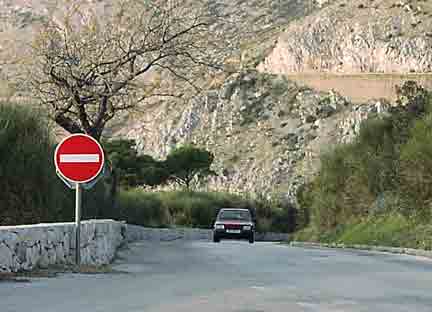
Austria so far seemed pretty homogenous, ethnically speaking, and I started to wonder if maybe it was because their flag is essentially a rectangular 'do not enter' sign. I wonder if maybe would-be immigrants got to the border and were turned away by all the signs, deciding to go elsewhere.


One thing I noticed in Czech Republic that seems to be a (disturbing) trend is the complete ubiquity of American music. At least 98% of the music we've heard on this trip - no matter where we are - is in English. The radio stations here don't really seem to care that Britney Spears and Metallica aren't usually supposed to be played back-to-back, followed by Simon and Garfunkel. As long as it's American, everything's A-OK. I don't necessarily mind them listening to American music. I love American music. It's just that most of what they play is crap, just as it is in the US, and I fear that all the bad movies and music we're filling them with might spoil Europe for future generations.

Anyway, after a few days in Salzburg, we rented a car (a Volkswagen Polo to be exact) and drove through the beautiful Danube Valley on our way to Vienna. The drive was phenomenal and we had perfect weather for a change. Photos will soon be posted, as they would better explain the scenery.


A stop along the way, Wolfgangsee, Austria.


Then, before we knew it, we were in Vienna. O, Vienna! Many times a year (i.e. birthday and Christmas) I become the kid whose favorite movie is always the one I saw most recently - I never fail to say that each birthday is 'the best birthday ever' and every Christmas is 'the best Christmas ever'. And I always mean it. I also mean it when I say Vienna is the best place in the world (although maybe I should see Paris again before jump to any conclusions).

Everywhere you look in Vienna there is something beautiful to see, full of history and life. We saw most of the things you're supposed to see in Vienna, considering one could easily spend a month there and not have time for everything. We saw hundreds of pieces by Schiele, Klimt's famous Beethoven Frieze in the Secession building, Stephensdom, Vienna's amazing gothic cathedral, complete with catacombs, Schubert's birthplace and final resting place. We rode the ferris wheel from The Third Man, and went to the imperial palace, Schloss Schonbrunn, where we stood in the room in which Kennedy and Khrushchev met in 1961. And so much more.


Schloss Schonbrunn.


My favorite building in Vienna.


Even Vienna has rebels.


Vienna is also quite guilty, however, of 'Mozartmania', which it must have caught from Salzburg. It's a shame, in my opinion, that of all the Mozart shops and cafes and hotels and candies, there is barely a mention of Beethoven, who lived there for many years, and even less of Franz Schubert, who was born and died in Vienna. The worst incarnation of this sad obsession came when we went to the tiny 'museum' in the modest house where Schubert was born. From the window of his small birth-room you can gaze across the street and see a bar called 'Mozart Stuberl'. Likewise, the section of the cemetary in which Beethoven and Schubert were laid to rest within a few feet of each other (how convenient!) has a huge monument to Mozart almost overshadowing the two gravestones. That's right, a MONUMENT. He isn't actually buried there, but they couldn't just let Beethoven and Schubert be the only tourist attraction there.


L to R: Beethoven, Mozart, Schubert.


Here lies Ludwig van Beethoven.


Having seen and loved Vienna as I did, I had only one remaining wish for my time in the city - that it would snow. On our last day there I got my wish, as it snowed lightly throughout the day, making the experience all the more wonderful. Truly, I never wanted to leave.

Today we took a train to Bratislava and arrived in the midst of a full-fledged snow storm. It was a great way to begin the next leg of our journey in a new country.


Snow in Vienna.